Elevé – Resort in Goa
Set deep within a forested valley in Assagao, Goa, Eleve embodies a commitment to building with minimal disturbance to the land’s natural ecosystem. The site has its own character—steep sloping terrain, mature trees, a raw laterite rock face, and a historical well still cherished by local families. Hornbills, kingfishers, and numerous other birds moved across the canopy during early site visits. Their presence became the project’s quiet directive: preserve the landscape and elevate the built form. Above all, ensure wildlife continues to inhabit the valley long after the intervention.
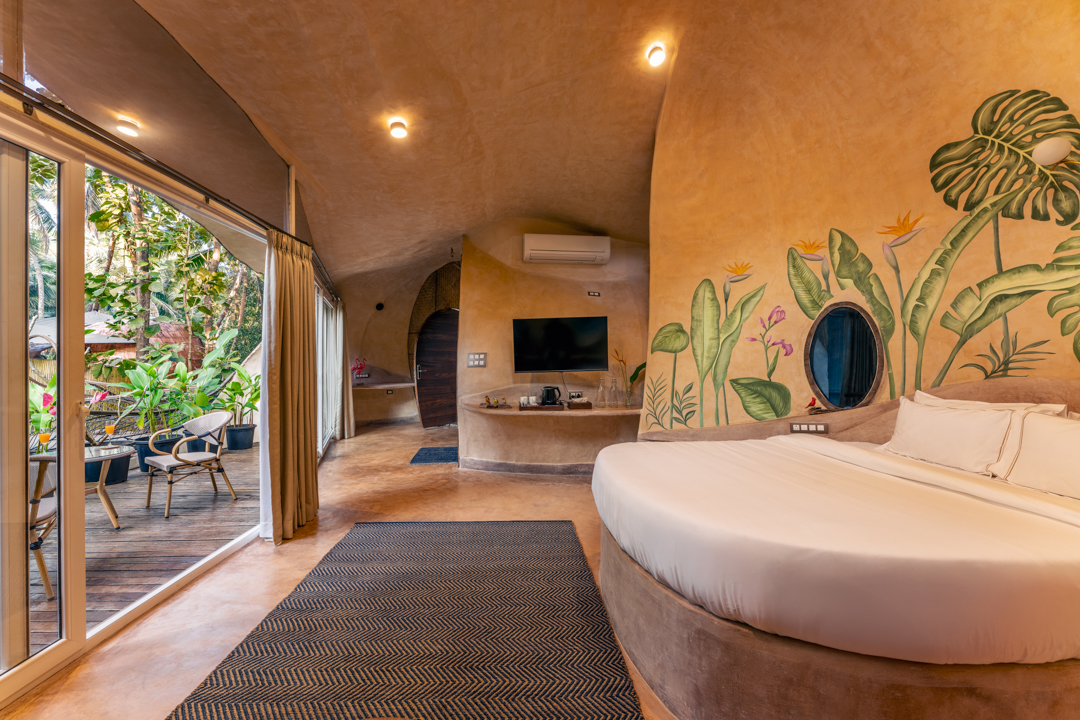
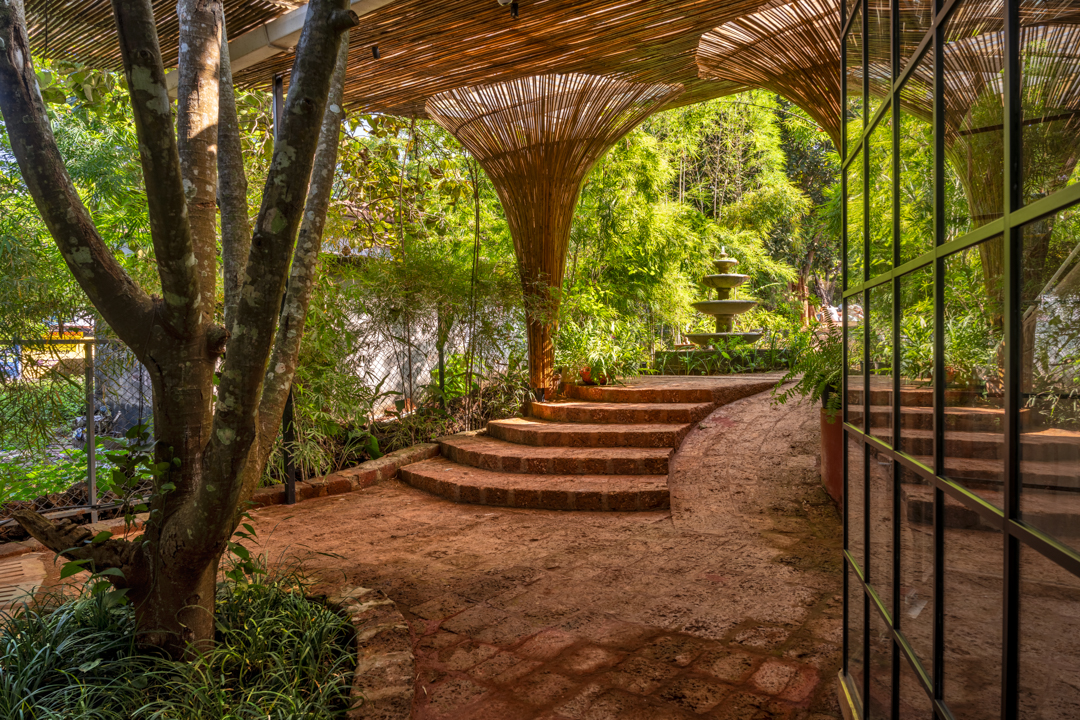
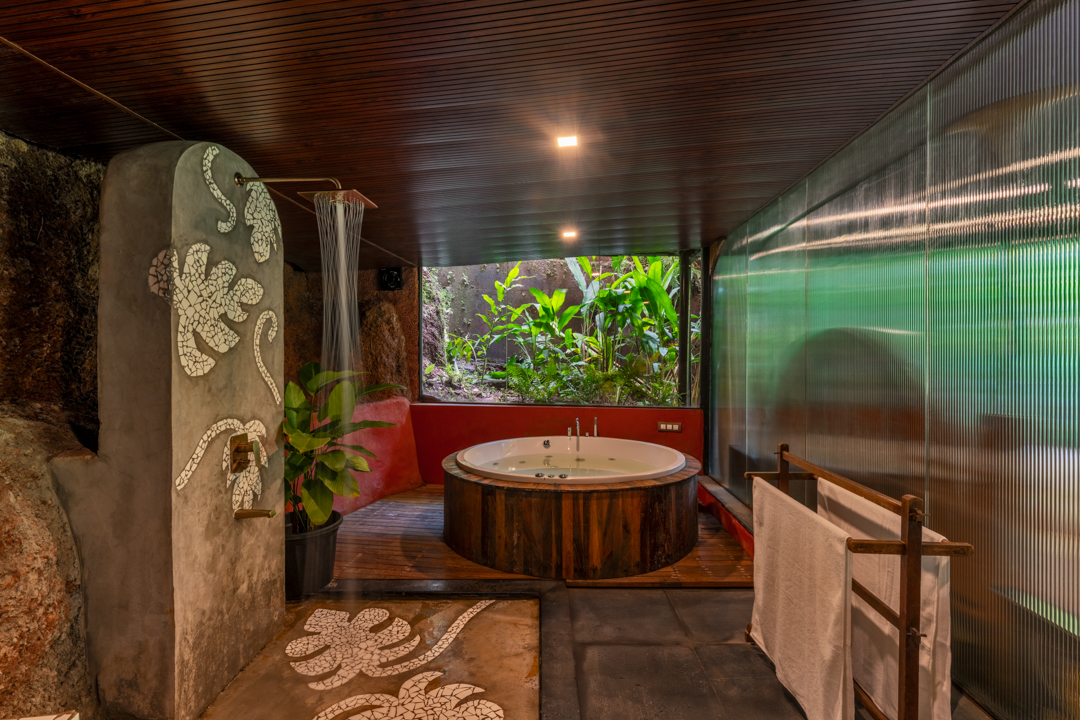
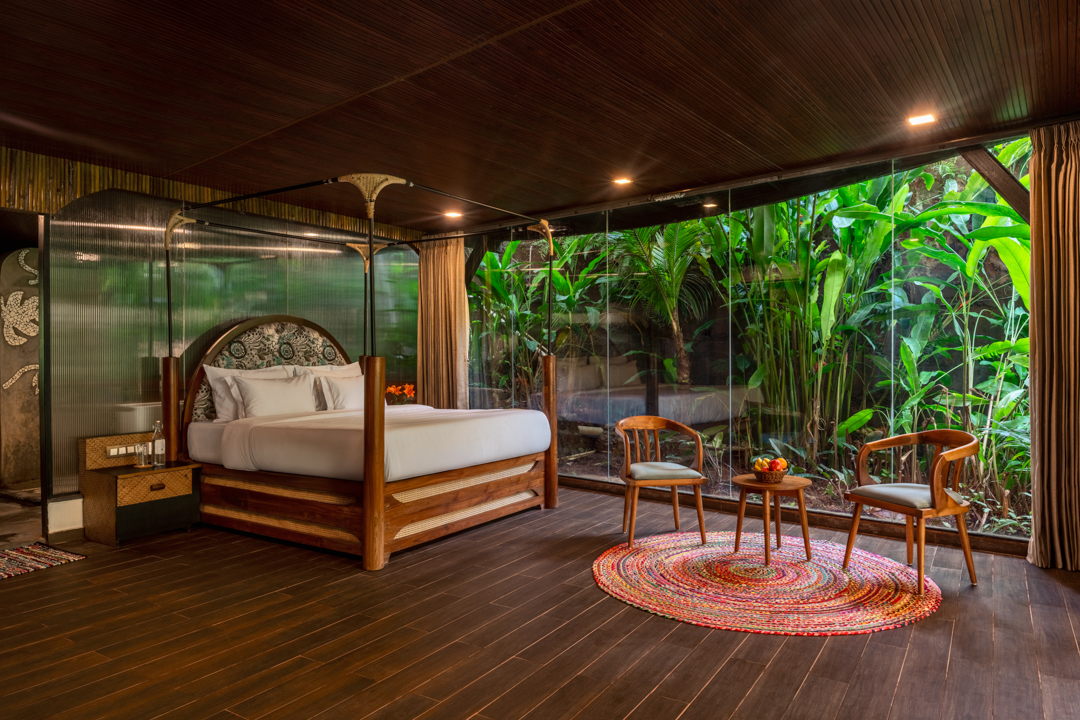
Goa Resort Video Preview – Architecture & Nature in Harmony
Letting the Land Lead
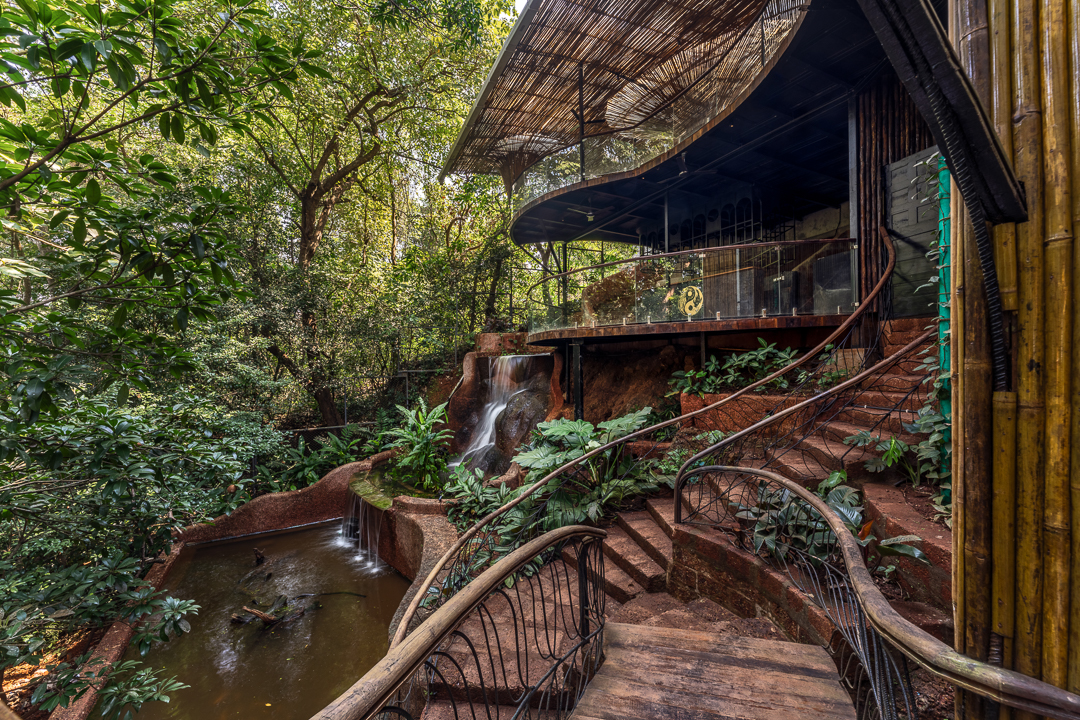
The design follows the natural logic of the terrain. Rather than reshaping slopes or clearing vegetation, the architecture adapts to existing contours. The exposed laterite rock face, left untouched, now forms a dramatic backdrop for a cascading waterfall that spills into a lagoon-like waterbody below, where koi swim between plant islands.
The entire project is anchored in a desire to maintain the forest floor as a living, continuous ecosystem.
Arrival in the Treetops
Guests enter Eleve at the natural ridge level, where a small reception and bamboo restaurant pods sit quietly among the upper canopies. The rustling of leaves and glimpses into the valley below create a serene first impression—an atmosphere that slows the pace and draws guests into the forest’s subtleties.
Beyond the reception, the restaurant unfolds as a series of bamboo pods lightly resting among the branches. Dining here feels like an elevated treetop experience: hornbills glide across the valley, filtered light dances through bamboo, and the space remains deeply connected to its surroundings.
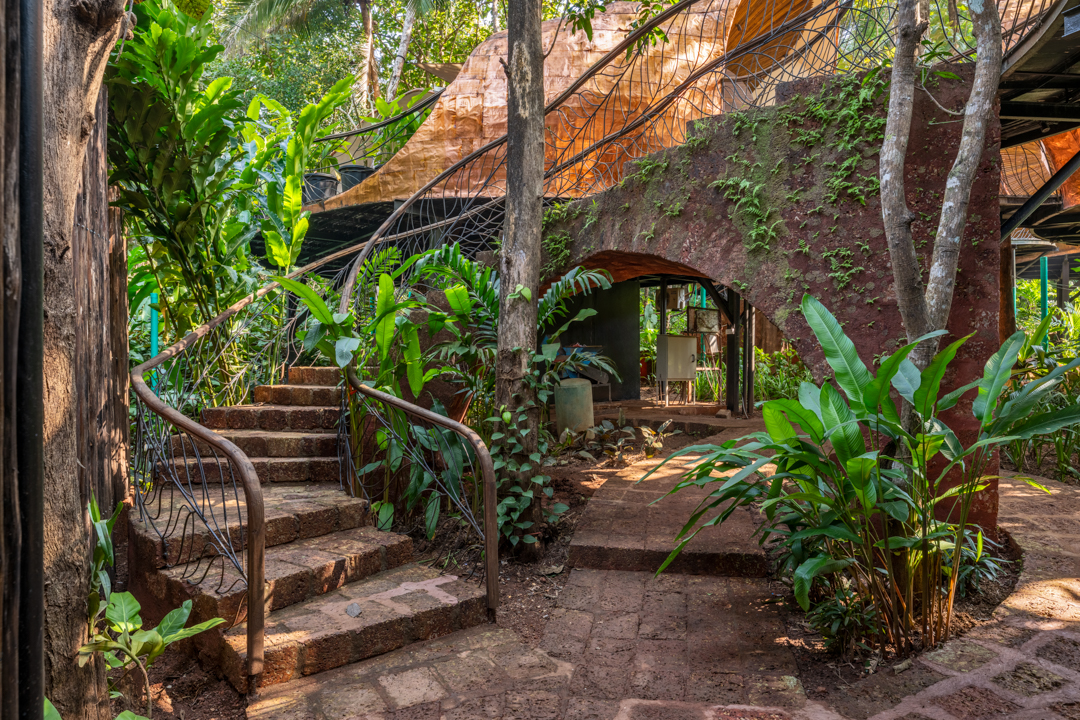
From this level, guests descend downslope via steps carved into the laterite edge, or take the elevator that provides accessibility across all levels.
Hidden Retreats
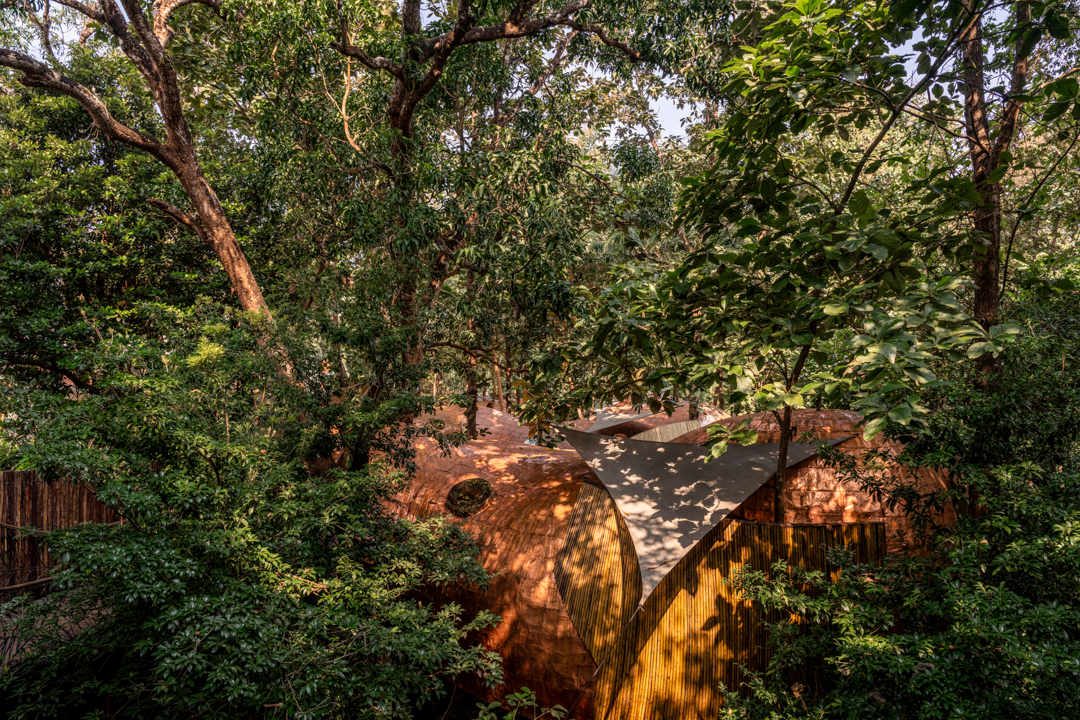
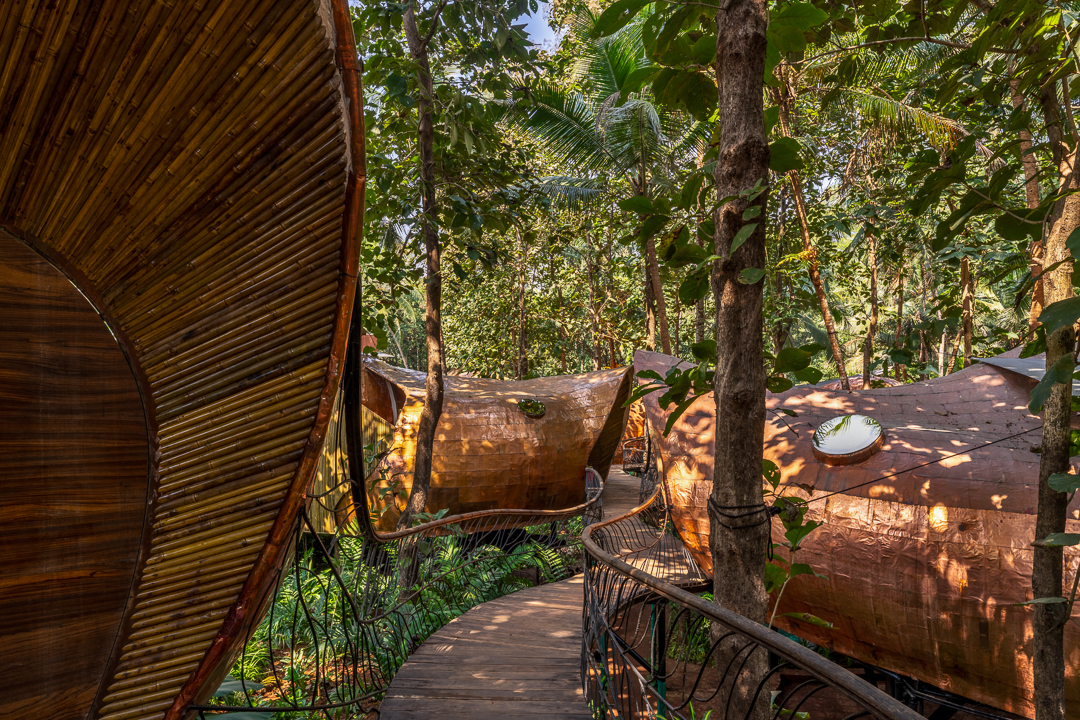
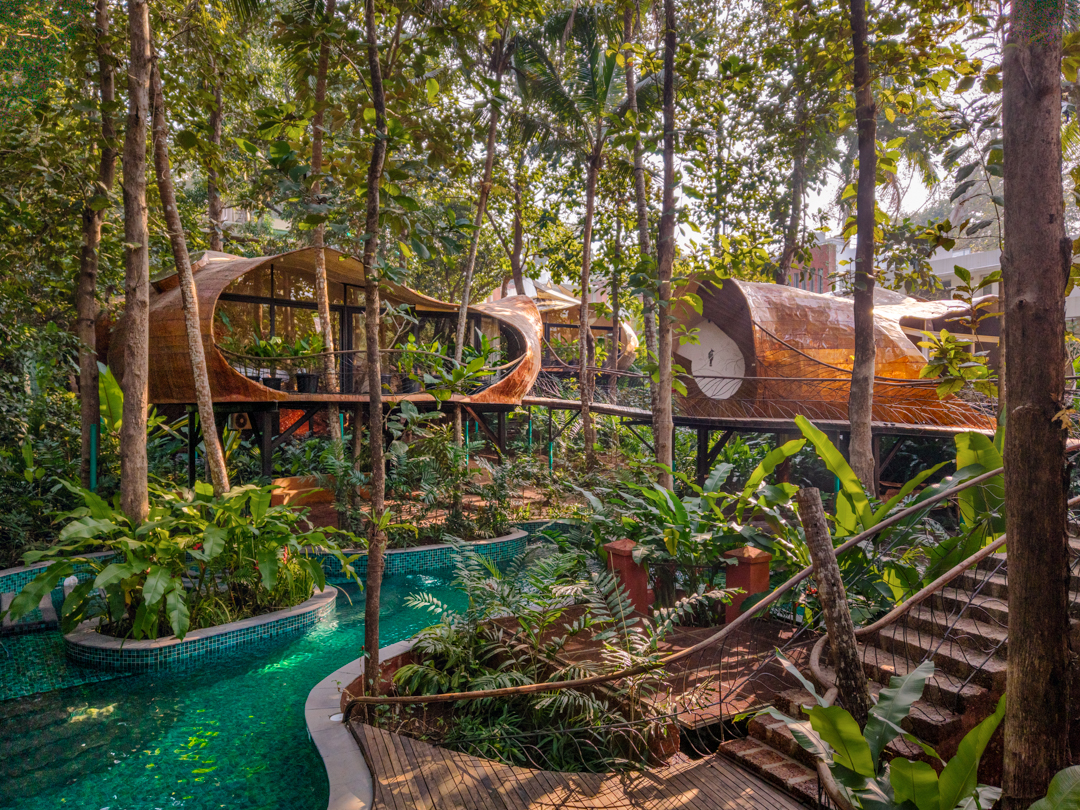
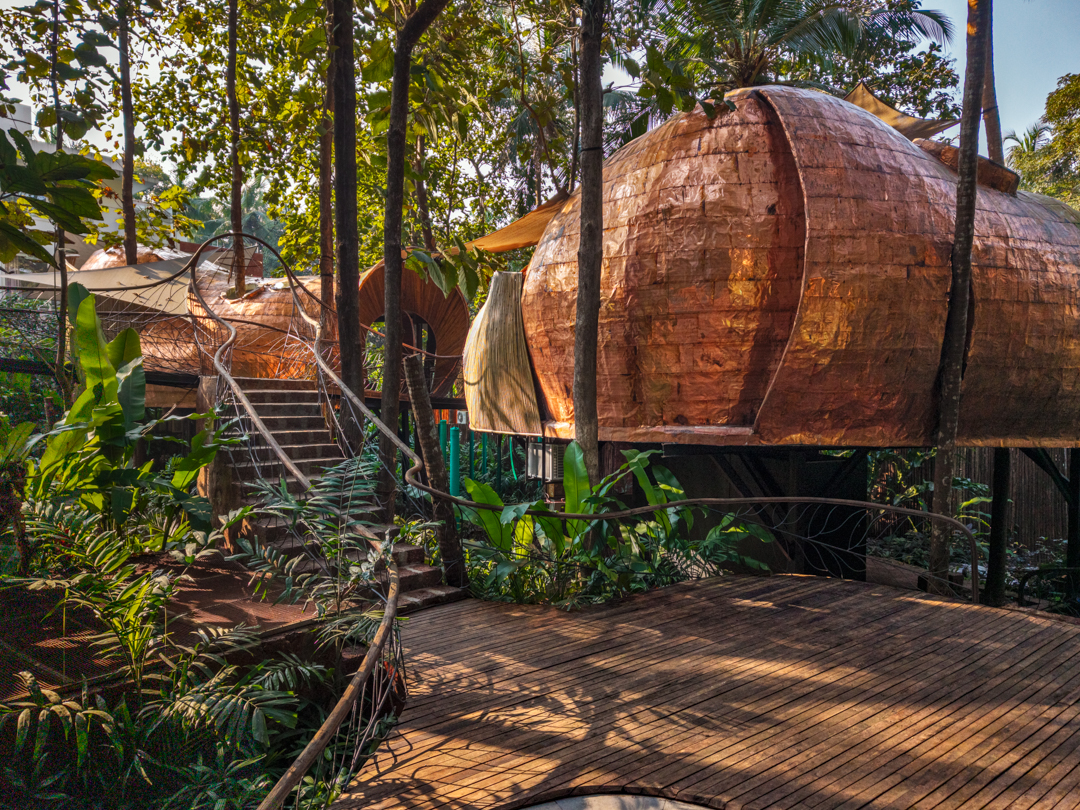
Further along the slope, the copper-clad rooms stand on slender metal stilts topped with timber, carefully positioned around existing trees and natural clearings. Their hand-formed, curved, and sculptural exteriors develop a beautifully evolving patina over time. Copper was chosen for its natural origin, distinctive aging, and high recyclability, allowing the pods to blend seamlessly into the forest as seasons change.
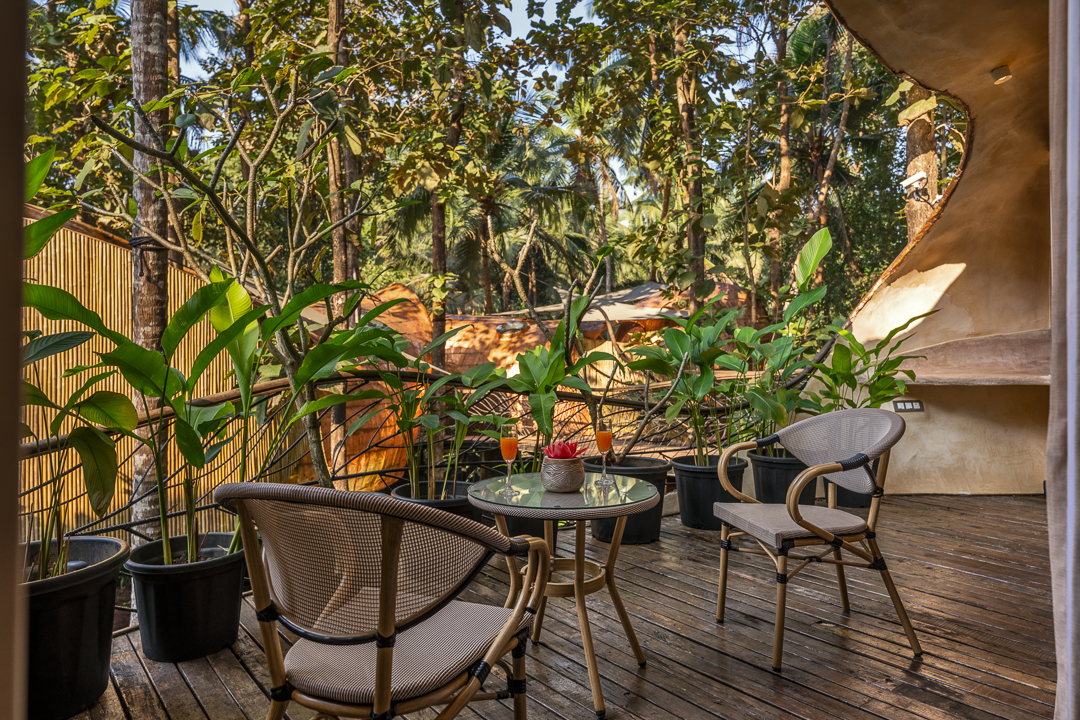
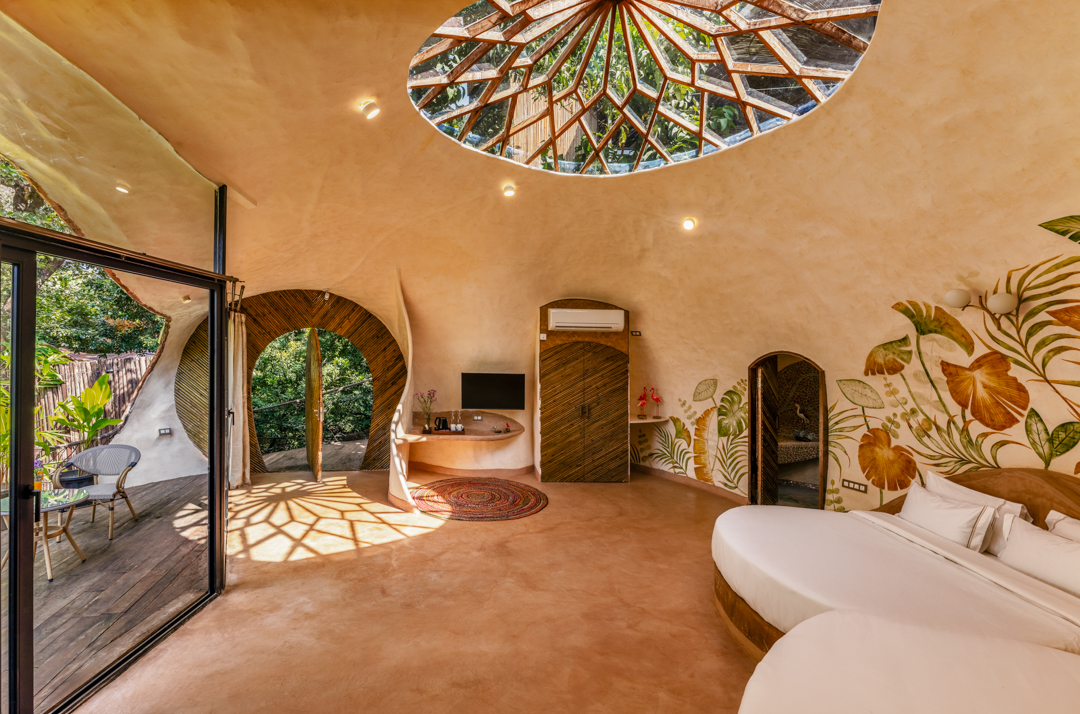
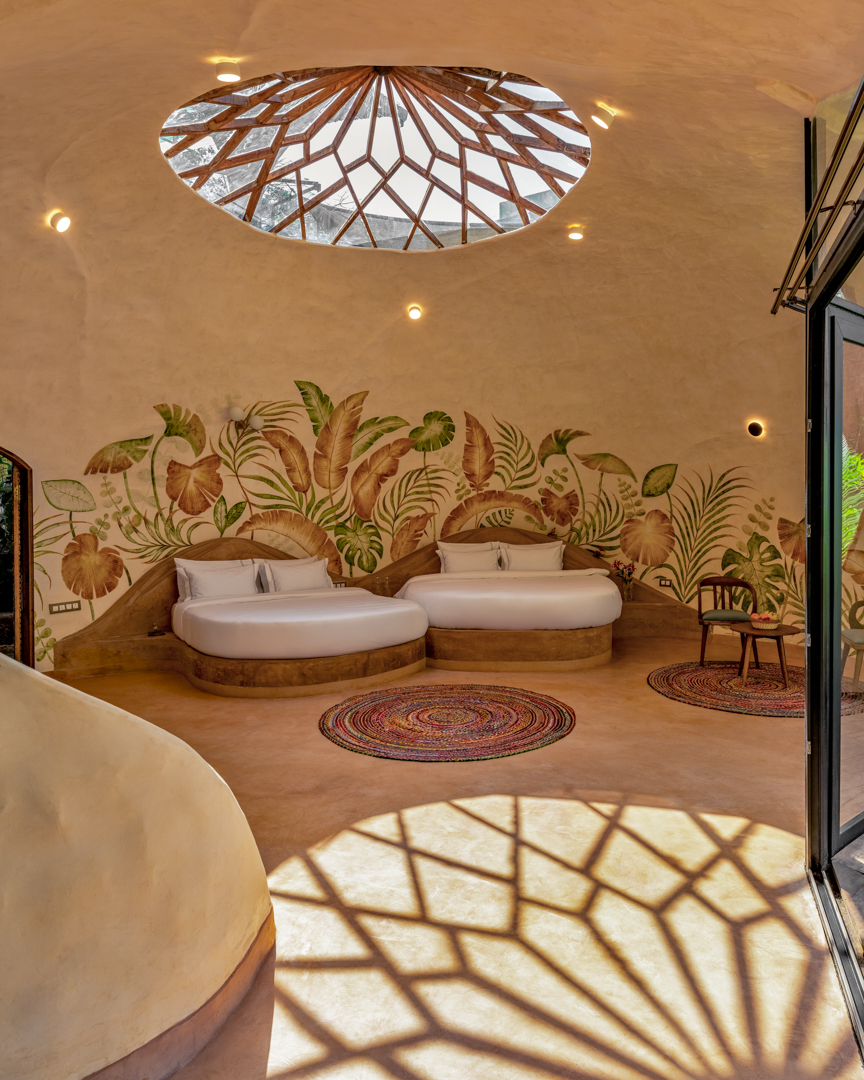
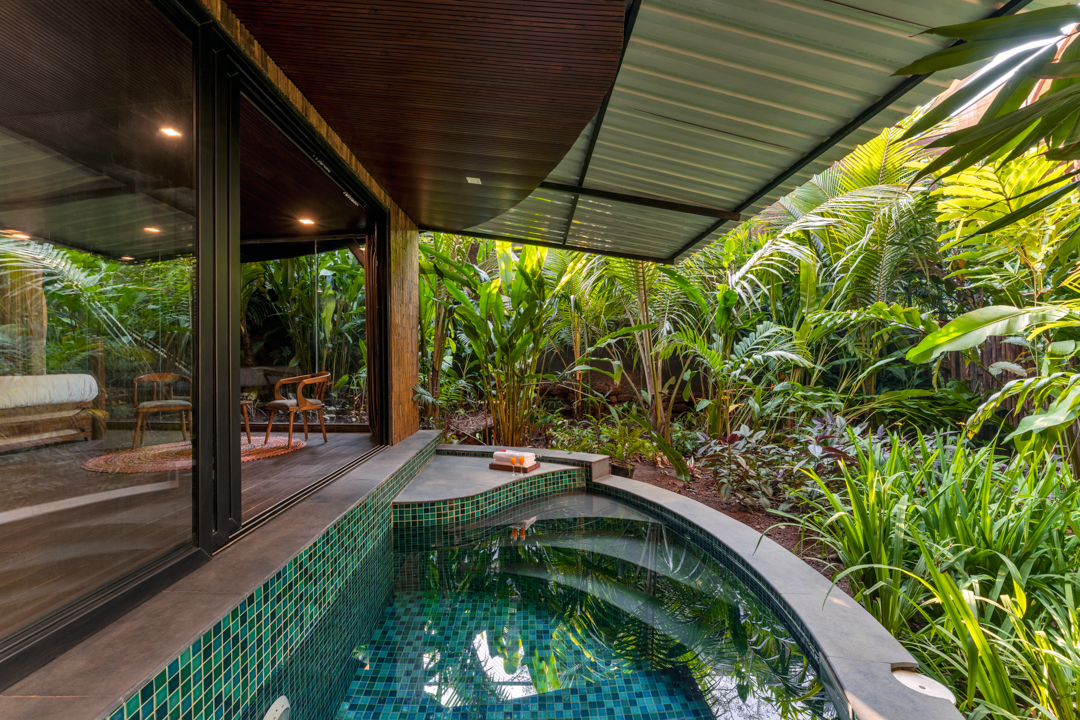
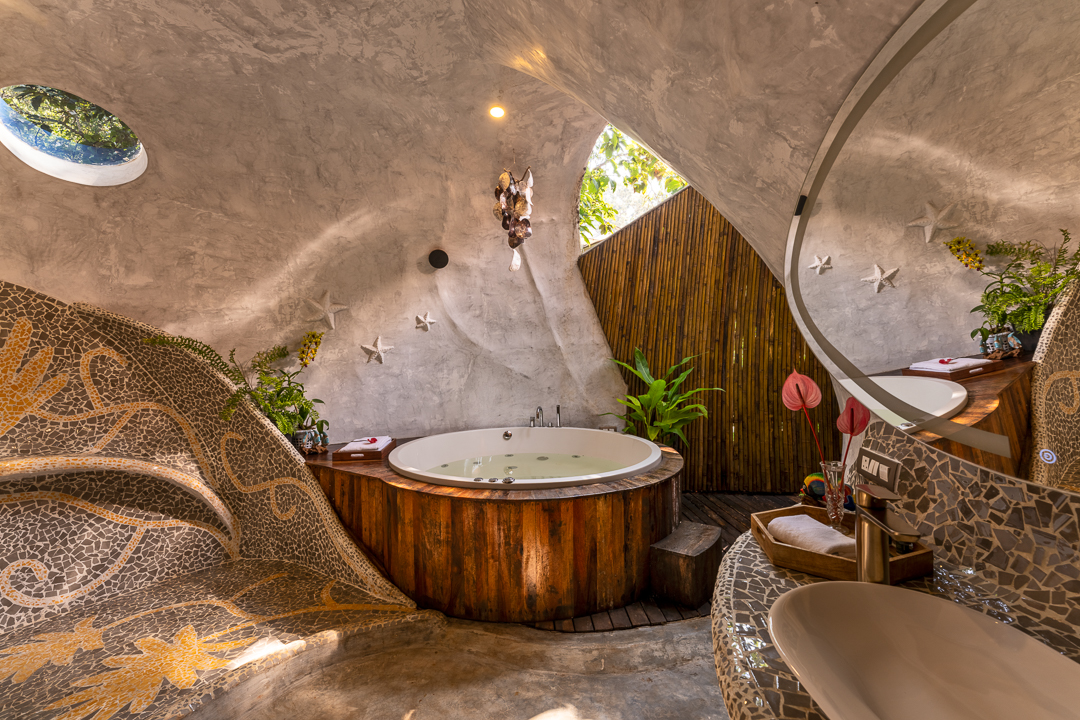
Each room’s entry narrows into an intimate threshold, then opens into a spacious, softly sculpted interior. Light glides along curved surfaces, revealing views that unfold gradually. Private decks extend into the foliage, framing filtered forest vistas, while select rooms include small plunge pools that heighten moments of biophilic immersion. A flowing wooden walkway, bordered with vine-inspired metal railings, weaves through natural openings, lightly touching the land and preserving the forest floor as a continuous habitat.
Lagoon, Glass Cabins & the Valley Floor
At the base of the valley, the preserved laterite rock face becomes a defining natural landmark—its rugged surface catching shifting light and revealing the raw geology of the site. Water traces parts of this surface, creating a quiet, reflective moment before pathways continue downhill.
Deeper into the site, the lagoon-like pool occupies a central position, shaped organically to follow the terrain and edged with planting and timber decking. Beside it sits the historic community well, preserved exactly where it has stood for generations. Rather than relocating or concealing it, the pool, deck, and a small, intimate barbeque area have been carefully arranged around this feature—creating a welcoming spot for gatherings, where the scent of sizzling food blends with the forest air while maintaining the valley’s natural flow. Sculpted laterite arches mark the descent into the pool level, adding a tactile, geological transition from the rooms above.
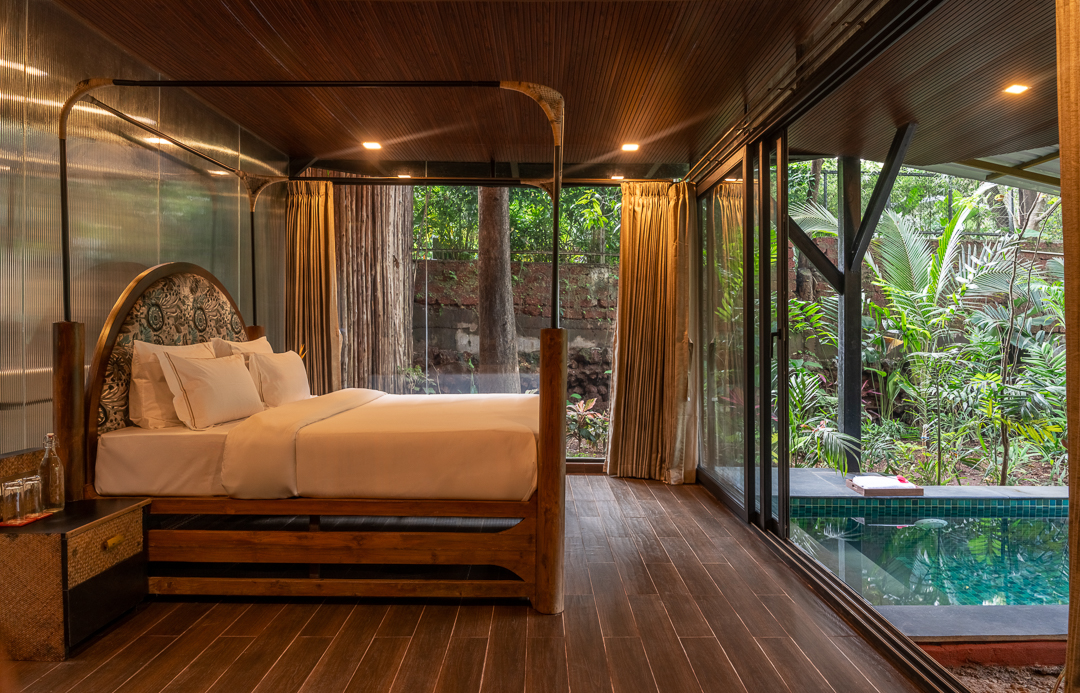
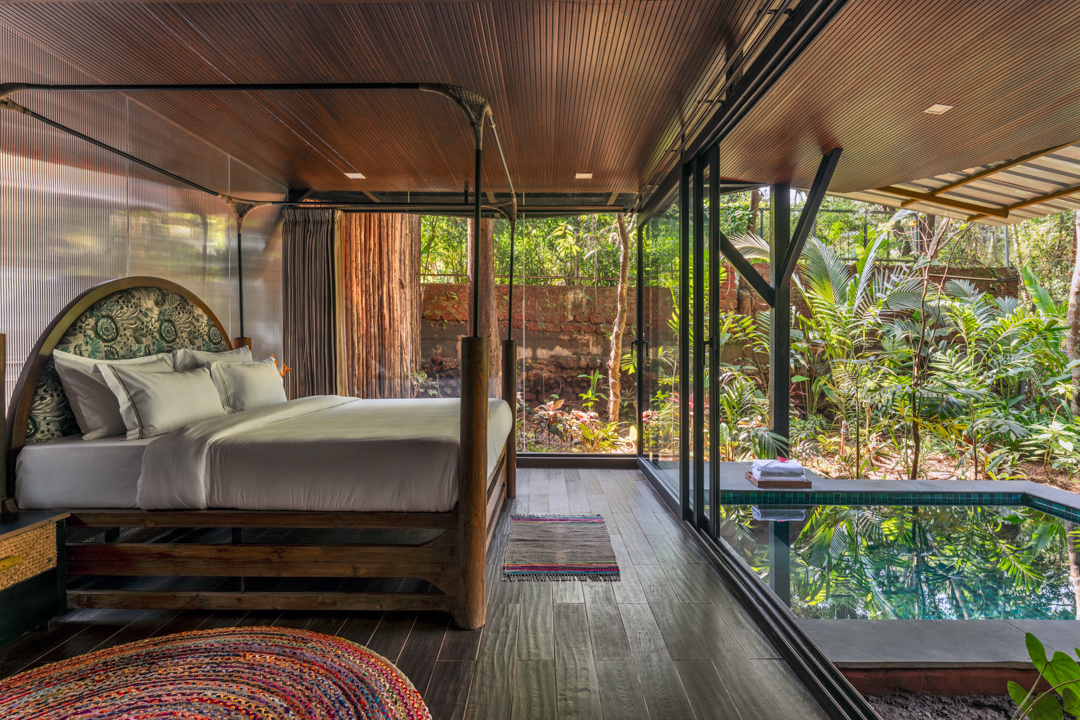
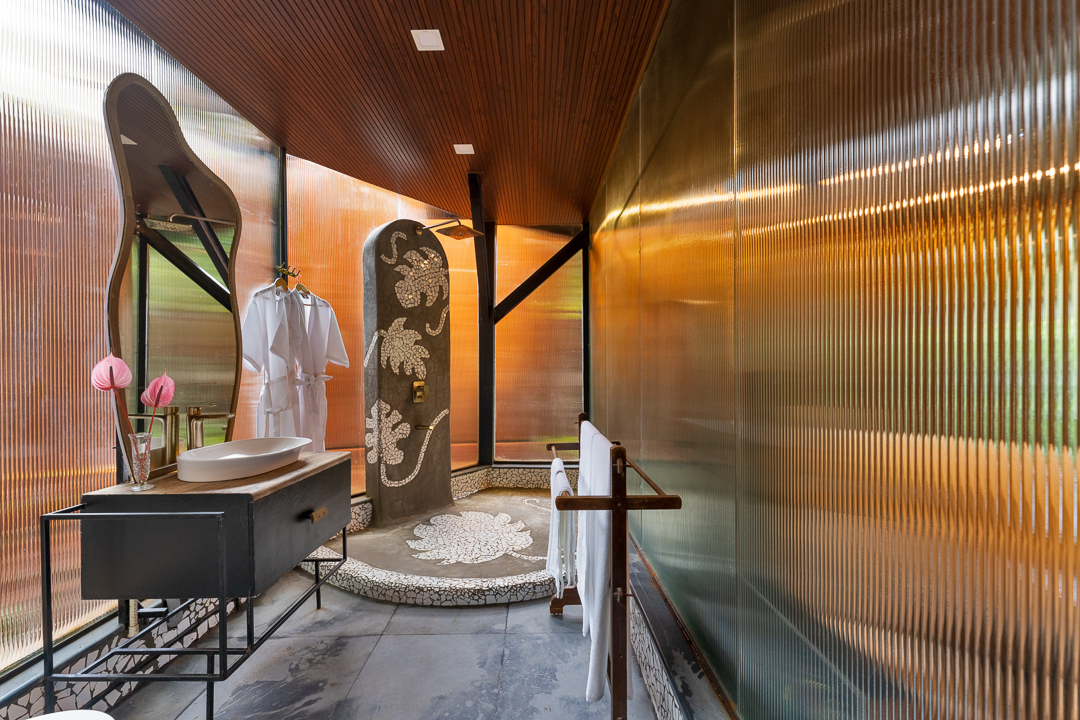
At the same valley floor, the glass cabins sit embraced by dense vegetation. Their transparent façades dissolve into the forest, drawing shifting shadows, branches, and seasonal textures inside—offering the most immersive connection to the surrounding ecology.
The Eleve Ethos
Eleve is guided by a simple principle: architecture should serve the land, not the other way around. This philosophy is reflected in how buildings perch lightly on stilts, how movement flows with natural contours, how vegetation dictates placement, and how wildlife continues to inhabit the site freely. Materials are chosen for their honesty and longevity, and each structure stands as a respectful guest within the forest.
Eleve is more than nestled in a landscape—it grows with it, listens to it, and invites guests to do the same.